
First Screwworm Case Detected in the US - What It Means For Cattle Prices
Commodity Report #251


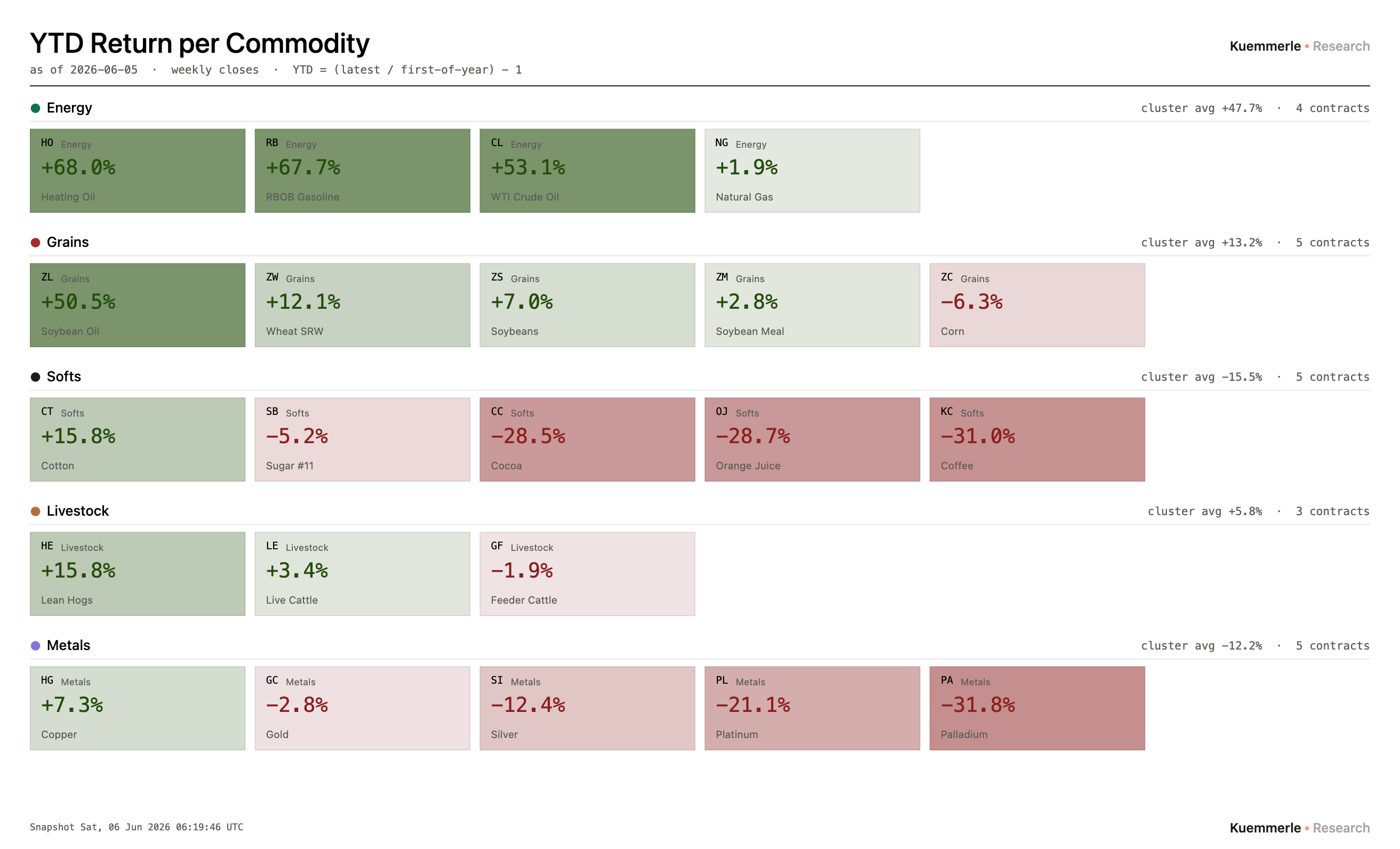
*YTD our absolute return strategy is up +4.9%
Find our 2025 performance here (+20% total return and 2.99 Sharpe)
First Screwworm Case Detected in the US - What It Means For Cattle Prices
It has been two weeks since my last newsletter but this week I’m back with an interesting story. Last week the USDA confirmed the first US screwworm detection since 1966.
So far it is a volatility event, not a herd event. The dominant price driver is unchanged: the smallest US cattle herd in 75 years plus a closed Mexican border.
As a response USDA has scaled up the Sterile Insect Technique (4 million sterile flies/week by air plus ground release). It’s an environmentally friendly biological control method that suppresses pest populations by mass-rearing, sterilizing, and releasing large numbers of sterile male insects into the wild.
Context here is also important the screwworm is infecting the host but not the meat. The disease is an animal-health issue, not a food-safety one. This is very important when deciding between futures contracts (live cattle or feeder cattle…see below)
As long as the screwworm isn’t affecting other regions and spreads across Texas - this will be a non-event. If it does though it actually could be bearish for US cattle futures. As a response importers of US meat would be likely to skip imports in order to protect the national herd.
The real fundamental lever isn’t the detection — it remains the emergency suspension of Mexican live-cattle imports in place since late January (~1.5 million feeders/year gone). Full border reopening is 18–24 months away an there will be no meaningful herd expansion before 2028.
For us, headline-driven dips look more like buying opportunities than a trend break, as long as the outbreak stays contained.
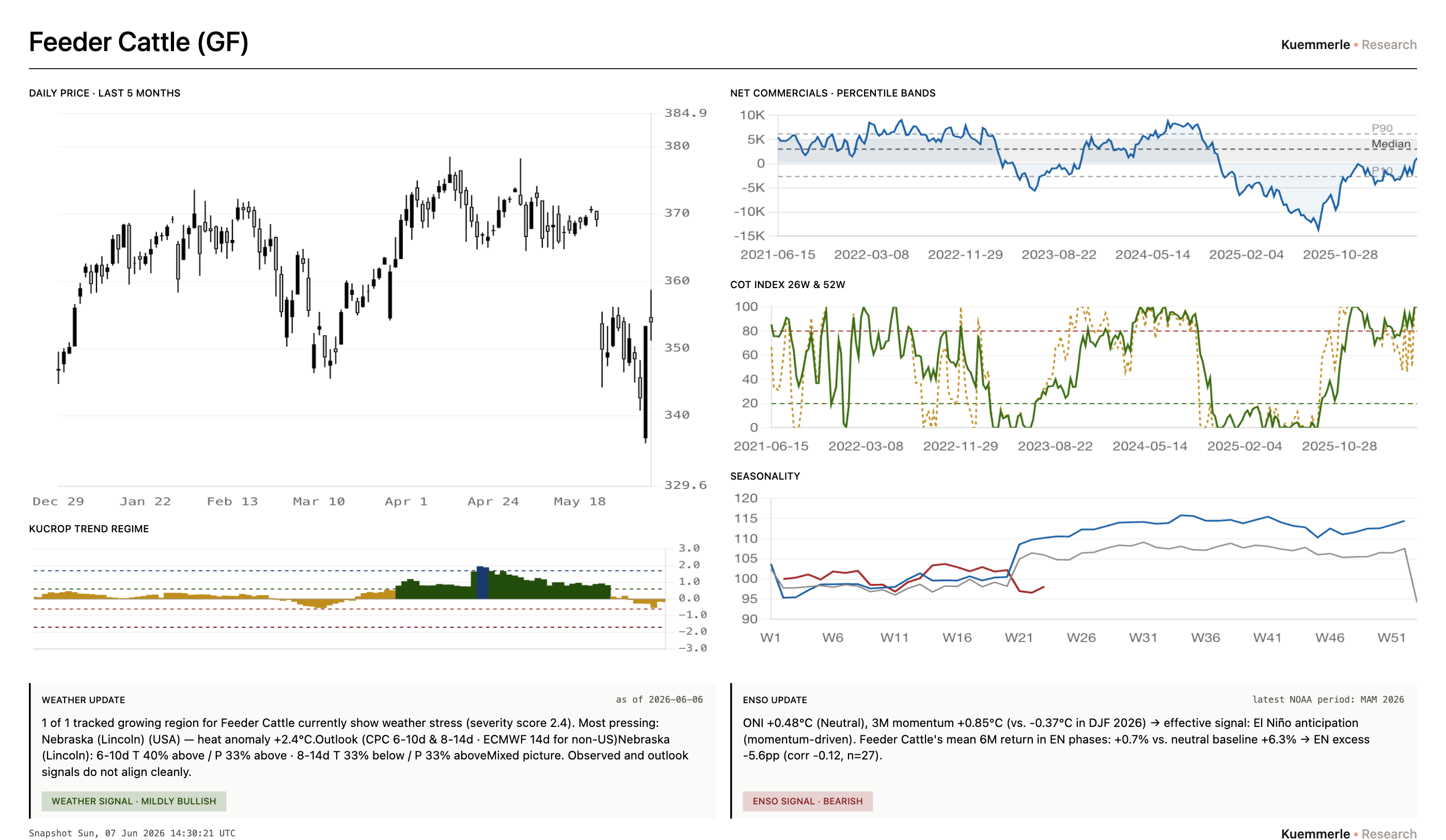
GF (Feeders) — bullish, higher beta. Directly hit by the Mexican ban and by any movement restrictions; the tightest supply strand. First choice to express the scarcity thesis.
LE (Fed) — constructive, but the demand/export valve. Feedlots are still supplied near term; tightness shows up with a lag. This is where the realistic bear risk sits: export restrictions from trading partners hit the cutout more directly than any consumer headline.
Spread: Long GF/Short LE captures the differential exposure more cleanly
We hold our bullish bias, play strength in GF, and use LE as the demand/export sensor. The headline is loud, the fundamentals are louder…until a genuine containment failure or demand break flips the picture.
What Would Break the Thesis — Triggers to Watch
Containment fails: further detections in other parts of Texas and evidence of an established breeding population. This could lead to near-term additional supply shock (extra bullish GF), but medium-term export/demand risk (pressure on LE).
Export bans from trading partners which would lead to direct hit to cutout (LE)
Institutional Services
If you’re an institutional investor that wants to commit money into our strategy, receive a portfolio-overlay or copy our strategy to participate directly from our framework - contact us via info@lukas-kuemmerle.com
Till next Monday, Lukas
If you have any questions in the meantime, please feel free to contact me via X or Mail.
Screwworm lands when the US herd is already near a multi decade low, so the shock hits an inelastic market. The bigger risk is import bans on Mexican feeder cattle. That is where the real price gap opens up.
Second case in Tavala county confirmed by USDA (30 day old calf) approx 5 miles from the first case.